
6 AI Keyword Research Tools Every SEO Should Know About

Here’s something most SEO guides won’t say out loud. A lot of keyword research is just educated guessing dressed up in spreadsheets. You find a keyword with decent search volume, the difficulty score looks manageable, you write a solid piece of content around it, and then you wait. Weeks pass. Sometimes months. You check your…
Zannatun Nime
Here’s something most SEO guides won’t say out loud. A lot of keyword research is just educated guessing dressed up in spreadsheets.
You find a keyword with decent search volume, the difficulty score looks manageable, you write a solid piece of content around it, and then you wait. Weeks pass. Sometimes months.
You check your rankings obsessively, refresh Search Console more than you’d like to admit, and eventually accept that the page is just sitting somewhere on page three doing absolutely nothing for anyone.
Sound familiar? It happens to almost everyone who’s spent serious time trying to grow a site through search. And more often than not, the problem started way before the writing did. It started with the keyword choice itself.
That’s the actual problem keyword research is supposed to solve, and it’s also where most people take shortcuts that cost them later.
AI keyword research tools have made a genuine dent in this problem. The better ones don’t just hand you a list of terms and leave you to sort through them alone.
This guide covers six AI keyword research tools worth your attention right now. Not the six with the biggest marketing budgets or the most blog posts written about them, just the six that genuinely do useful things for the people who use them.
We’ve been straight about what each one is good at, where it runs out of steam, and who it realistically makes sense for.
What does AI actually do in keyword research?
The term “AI keyword research” appears frequently in discussions but no one explains what processes occur during this operation. The evaluation of particular tools needs initial assessment about AI operational structures because different AI systems perform different tasks at their core.
Intent analysis: AI systems perform intent analysis by determining the actual needs of users when they enter their search queries.
Topic clustering: AI uses topic clustering to organize keywords into thematic groups which lets you create comprehensive content about a subject instead of producing multiple weak pages that compete for each other’s traffic.
Difficulty scoring: AI models analyze actual website pages that rank highest for particular keywords to determine how difficult it would be to surpass these competitors.
Competitor gap analysis: AI compares what your site ranks for against what your competitors rank for and shows you the keywords you’re missing that would logically make sense for your site to target.
Long-tail discovery: AI finds keyword variations and question-based searches that free tools regularly miss.
Trend detection: AI monitors how search patterns shift over time and flags terms that are gaining momentum before they become obvious targets with serious competition.
Best AI Keyword Research Tools: Summary Table
| Name | Best For | Free trial | Starting price |
| Ahrefs | In-depth keyword and competitor research | Limited free tools | $99/month |
| Semrush | All-in-one keyword and SEO management | 7-day free trial | $129/month |
| Moz Pro | Beginners and mid-level SEO teams | 30-day free trial | $99/month |
| Keyword Insights | AI keyword clustering and intent mapping | Limited free credits | $58/month |
| LowFruits | Low-competition keyword discovery | Free limited plan | $25/month |
| Frase | Keyword research tied to content creation | 5-day trial for $1 | $45/month |
Top 6 AI Keyword Research Tools in 2026
1. Ahrefs
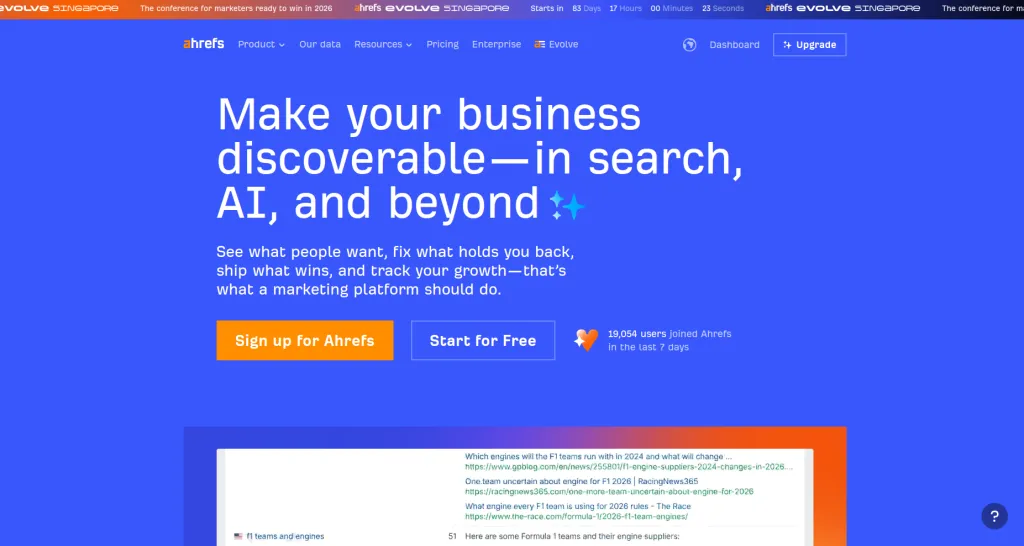
Ahrefs stands as a preferred tool that SEO experts continue to use after they master its capabilities during their first few months of application.
The tool provides users with an extensive collection of keyword information that matches the actual data found in Search Console while presenting a research process that goes beyond basic feature aggregation.
Users tend to spend their principal work period in the Keywords Explorer area, so they need to grasp its essential functions.
The system generates an instant display of thousands of related keywords, which show their search difficulty, monthly search volume, and potential website visitors, and the current ranking content types for each term.
Key Features:
- Keywords Explorer with AI intent signals
- Content gap analysis against competitors
- Keyword difficulty scoring
- Traffic potential estimates
- Search volume and click-through data
- Parent topic identification
- SERP overview per keyword
Pros and Cons:
| Pros | Cons |
|
|
Best For: SEO professionals, content strategists, and growing websites that need reliable keyword data and want AI-assisted insights built in rather than bolted on from a separate tool.
Pricing Plan: Lite plan from $99/month. Standard at $199/month unlocks more historical data and additional project allowances, which is where most regular users end up.
A small set of free tools exists without a subscription but the genuinely useful features sit behind the paywall.
2. Semrush
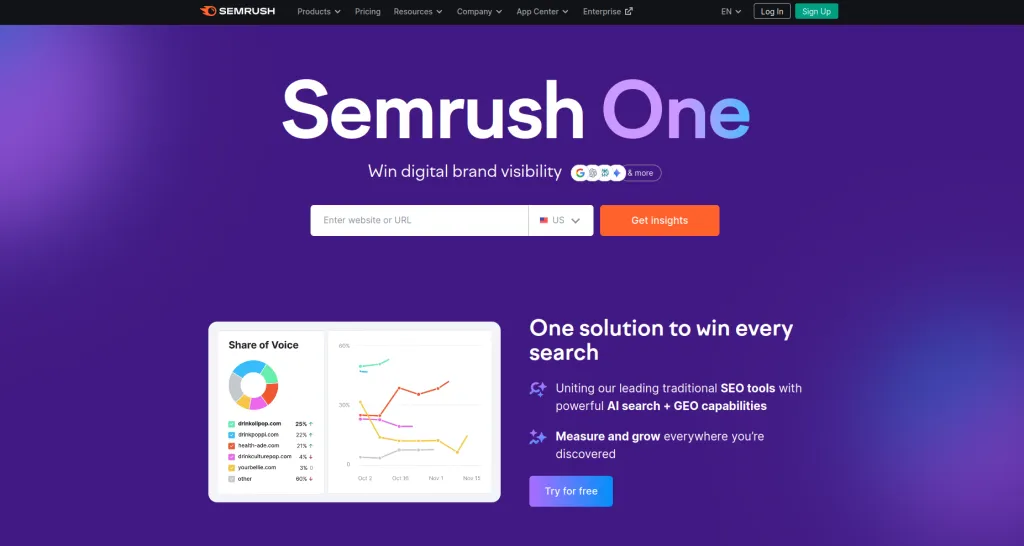
Semrush has been part of the SEO world long enough that most people working in the industry have at least opened it at some point, even if just to peek at a competitor’s traffic.
The Keyword Magic Tool has been the centrepiece of the platform’s research side for years, and the AI improvements around intent classification and automatic keyword clustering have made the day-to-day research workflow noticeably quicker.
Key Features:
- Keyword Magic Tool with AI intent filtering
- Keyword clustering and grouping
- Competitor keyword gap analysis
- Position tracking
- Keyword difficulty and volume data
- SERP feature identification
- Topic research tool
Pros and Cons:
| Pros | Cons |
|
|
Best For: Marketing teams, agencies, and anyone who needs keyword research to feed directly into content planning, competitor monitoring, and technical audits without juggling separate tools for each one.
Pricing Plan:
Pro plan from $129/month. Guru at $249/month adds the content marketing features that most teams eventually find they want. Seven-day free trial available to test it properly before paying anything
3. Moz Pro
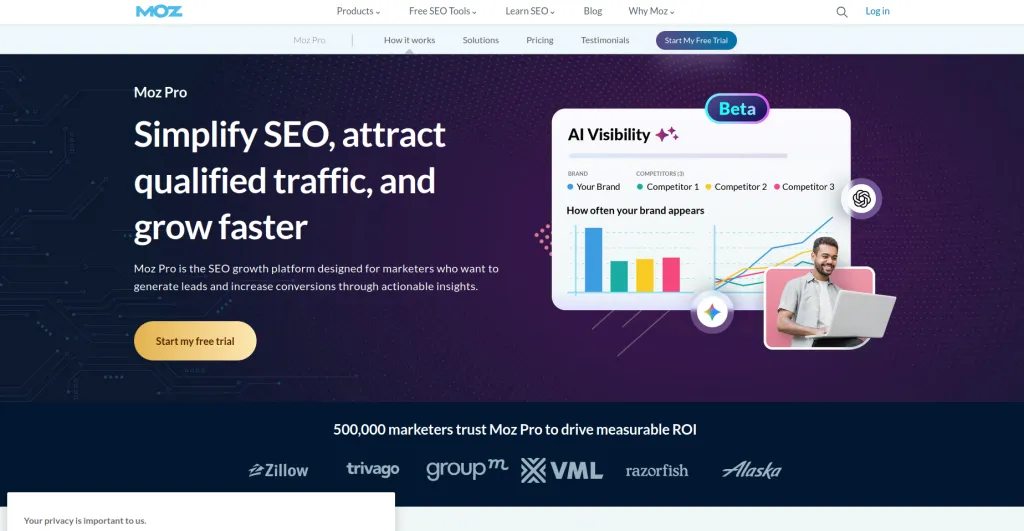
Moz has operated in the SEO industry for a longer time than most current tools have operated in this field. The platform provides benefits that most modern platforms cannot match because it has existed since the beginning of SEO tool development.
The keyword data provides reliable information that users can depend on for their research. The system shows its difficulty level through a clear method that lets you understand what elements affect the score instead of needing to accept it without explanation.
The interface development team focused their efforts on creating a usable interface instead of trying to include every possible feature in the design.
Key Features:
- Keyword Explorer with opportunity scoring
- AI-assisted intent classification
- Monthly volume and difficulty data
- SERP analysis per keyword
- Keyword list management and organization
- Rank tracking
- Site crawl and audit tools
Pros and Cons:
| Pros | Cons |
|
|
Best For: Small businesses, in-house SEO teams, and people who are relatively new to keyword research and want a reliable platform that doesn’t require an advanced degree to use effectively.
Pricing Plan:
Standard plan from $99/month. Medium at $179/month for more campaigns and additional keyword tracking capacity. The thirty-day free trial is the obvious place to start.
4. Keyword Insights
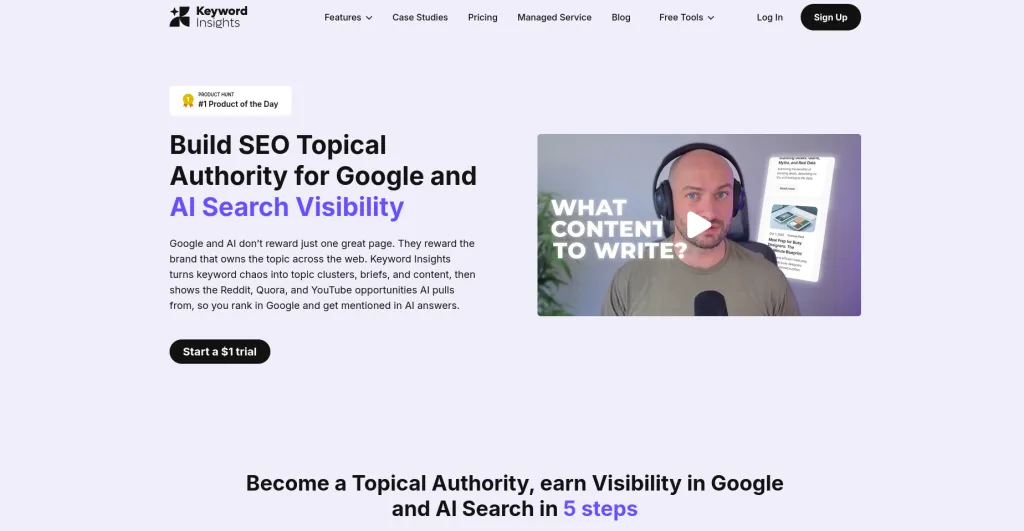
Keyword Insights, as its leading domain-specific tool, although most people outside of SEO content strategists remain unaware of its existence.
The system directs all its attention to two core operations which involve grouping keywords into thematic clusters and determining the purpose of user searches for each keyword group. For those two specific tasks, it’s genuinely better than most general-purpose platforms.
Key Features:
- AI keyword clustering by topic
- Intent classification per keyword group
- SERP similarity analysis
- Content brief generation from clusters
- Keyword cannibalization identification
- Hub and spoke content mapping
- Bulk keyword processing
Pros and Cons:
| Pros | Cons |
|
|
Best For: Content strategists, SEO consultants, and anyone regularly dealing with large keyword lists who needs to turn raw data into a structured content plan without spending half a day doing it by hand.
Pricing Plan:
Plans start from $58/month for the Basic tier. Higher plans allow more keywords processed per month. Limited free credits are available to test the clustering before committing to anything.
5. LowFruits
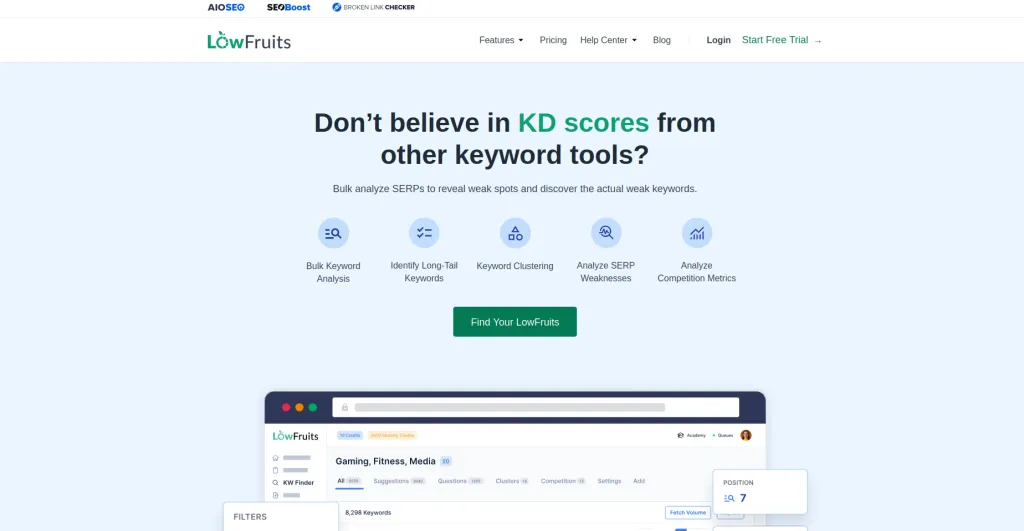
LowFruits has a very specific job and it does that job better than most of the bigger tools that treat it as a secondary feature. It finds keywords where the competition is genuinely weak enough that a newer or smaller site has a realistic chance of actually ranking for them.
Most keyword tools tell you difficulty based on general metrics. LowFruits looks at the actual pages sitting in the top ten positions for a keyword and assesses whether those pages are strong or weak.
If the search results for a term are filled with forum threads, outdated posts from small sites, or pages that don’t really address the query properly, that’s a genuine opportunity.
That’s a gap a well-written, relevant piece of content from a newer site can realistically slot into.
Key Features:
- Weak spot identification in current search results
- SERP quality analysis per keyword
- Keyword difficulty based on actual competing page strength
- Long-tail keyword discovery
- Bulk keyword scanning
- Question-based keyword finder
- CSV export for further analysis
Pros and Cons:
| Pros | Cons |
|
|
Best For: Newer websites, bloggers, and small business owners who are tired of chasing keywords dominated by sites with far more authority and need to find realistic entry points into their niche.
Pricing Plan:
Pay-as-you-go option available for occasional use. Subscription plans from $25/month. A free limited plan is available to test the core functionality and see whether it suits your research style.
6. Frase
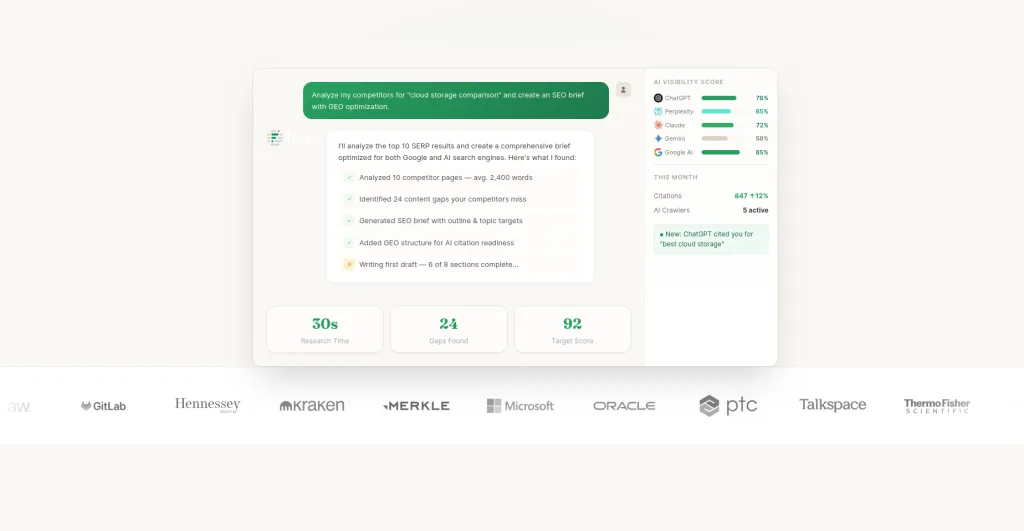
Frase sits in an interesting spot because it doesn’t really try to be a pure keyword research tool.
What it does is connect the research stage to the content creation stage in a single workflow, which turns out to be genuinely useful for teams that are tired of switching back and forth between a keyword platform and a content planning document.
The keyword research side isn’t as deep as Ahrefs or Semrush in terms of raw data volume, but what it does well is give you context alongside the data.
Key Features:
- AI keyword research tied to content intent analysis
- SERP content analysis per keyword
- Topic and question discovery
- Content brief generation from research
- Competitor content comparison
- AI writing assistant
- Content scoring against top results
| Pros | Cons |
|
|
Best For: Content teams, freelance writers, and small marketing teams who want keyword research and content planning handled in one workflow rather than across multiple separate platforms.
Pricing Plan:
A five-day trial is available for $1, which gives you enough time to run a proper test. Solo plan from $45/month. Team plan at $115/month for collaborative work.
How to choose the right AI keyword research tool
The easiest way to pick the wrong tool is to start by asking which one is the most popular or the most feature-rich. The two methods fail to show whether the tool will solve your current operational issues, which you need to address.
Start by being honest about what part of your keyword research process is actually broken. Your website will never reach top search engine positions when you target keywords that it cannot compete for because of its current authority level.
Your website faces ranking challenges because you select keywords that your domain authority level does not enable you to compete for. Your website will reach its search engine ranking limit because you work on keywords that exceed your existing authority level.
Your website will waste time because you handle keywords that exceed your existing authority level. LowFruits provides a direct solution for your problem because it allows you to target keywords that your site cannot rank for at present.
Budget is worth thinking about honestly, rather than just going for the cheapest option by default. The list contains inexpensive tools that achieve their low cost through limited functionality instead of reduced performance in their core areas.
LowFruits at $25 a month is genuinely better than Ahrefs for finding low-competition opportunities on a small site. Keyword Insights at $58 is better than Semrush for clustering and organizing a large keyword list. Paying more doesn’t always mean getting more of what you actually need.
Wrapping Up!
The problem of insufficient keyword analysis tends to remain unnoticed until it turns into a major issue. You publish content, it doesn’t really perform, and you tell yourself the competition was tough or the content needed more time to gain traction. The statement sometimes matches reality.
The main problem existed at the beginning because the chosen keywords contained the issue before any content creation began.
The main SEO function of good AI keyword research tools operates through this particular feature. The tool helps you evaluate decision-making information quality instead of performing your mental operations. Your website needs specific keywords that match your current online presence.
People want to find particular information when they enter their search terms into search engines. The process of finding competitor market gaps requires us to detect their unaddressed business areas.
The three elements hold more value than skillful writing or exact website optimization because the chosen keyword lacked proper suitability from the start.
The six tools that we have discussed here do not possess any magical abilities. The tools will not generate search engine rankings for websites that lack valuable content, and they do not fix ineffective content strategies.
The process will help you avoid dangerous research errors, which would have destroyed your SEO efforts from the beginning.

Written by
Zannatun Nime
February 22, 2026
Zannatun Nime writes about AI, developer tools, and social media marketing in a simple and easy-to-follow way. He enjoys making complex topics clear, practical, and useful for everyday readers.
Related reading

RESOURCES
Best Booking Plugins for WordPress in 2026 – Top Picks for Service Businesses
Discover the best booking plugins for WordPress in 2026. Honest pros, cons & pricing for every top tool. GemBooking leads the list for service businesses.

RESOURCES
Best WordPress Automation Plugins for 2026 (Complete Guide)
You didn't build a WordPress site to spend your days copying form entries into spreadsheets, manually emailing customers after every purchase, or chasing down the same tasks every single week. That gap between what WordPress can do and what it does automatically? That's where most site owners bleed time.

RESOURCES
Best Custom Post Type Plugins for WordPress in 2026 (Free & Pro)
You built your WordPress site. Posts and pages are live. Then your client asks: Can we add a Testimonials section? A Jobs board? A Portfolio gallery? This is where custom post type plugins save you.